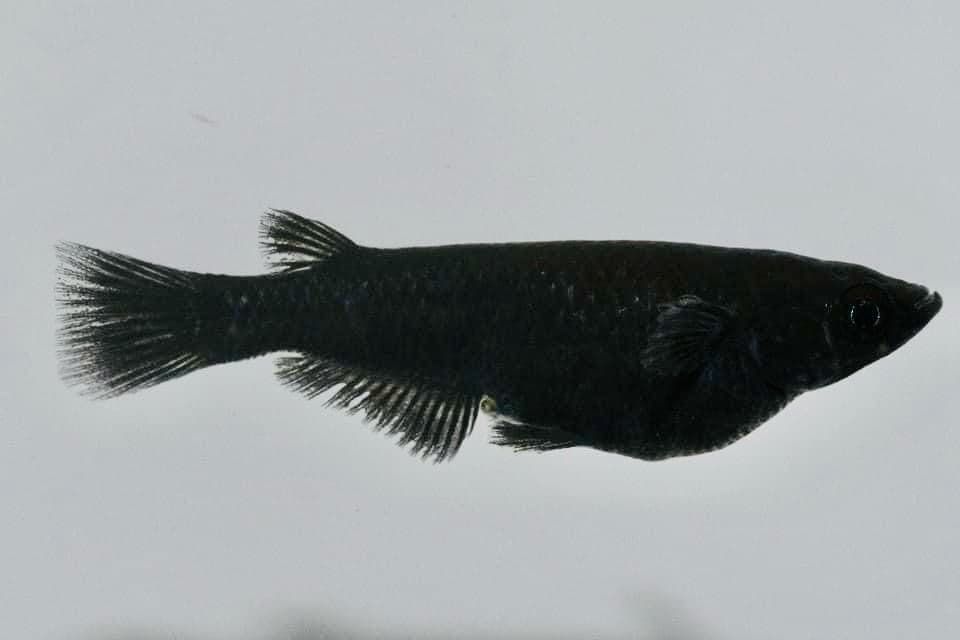
Black Ricefish (Oryzias nigrimas)
R45.00
Buy and save
Buy and earn R0.09 Loyalty for your next purchase
Loyalty is a discount program that lets you buy products and earn points to redeem on your next purchase. Your Loyalty balance is updated when you pay online or in-store. The Loyalty amount shown on this page can be recalculated at the checkout.
In stock
Save this product for later
Black Ricefish (Oryzias nigrimas)
Product Details
⚫ Black Medaka Ricefish (Oryzias latipes) Care Guide
Also known as the Japanese Ricefish, Black Medaka, or Japanese Killifish
The Black Medaka Ricefish is a selectively bred color form of the Japanese Ricefish, featuring a deep jet-black body with subtle metallic highlights. Hardy, peaceful, and highly adaptable, this species is ideal for planted aquariums, nano tanks, and outdoor tubs.
Tank Requirements
Minimum Tank Size: 30 litres
Temperature: 16–26°C
pH: 6.5–8.5
GH: 6–18
KH: 4–12
TDS: 150–350 ppm
They thrive in stable water with gentle filtration and are suitable for both heated and unheated aquariums. Clean, well-oxygenated water supports long-term health.
Habitat Setup
Recreate their natural, slow-moving environment with:
-
Fine gravel or sand substrate
-
Dense live plants and floating plants
-
Open surface swimming space
-
Gentle to minimal water flow
Floating plants such as Frogbit, Salvinia, or Water Lettuce help diffuse light and encourage natural behavior and spawning.
️ Feeding
Black Medaka Ricefish are omnivorous and easy to feed:
-
High-quality micro pellets or fine flakes
-
Frozen or live foods (baby brine shrimp, daphnia, cyclops)
-
Occasional spirulina or vegetable-based foods
Feed small amounts 1–2 times daily.
Tank Mates
Black Medaka are peaceful and social, best kept in groups of 6 or more.
Ideal companions:
-
Other Ricefish varieties
-
Small Rasboras
-
Peaceful Tetras
-
Shrimp and snails
Avoid:
-
Aggressive fish
-
Fin-nippers
-
Large predatory species
⚠️ Behavioral Note: They prefer the upper water column, so avoid tank mates that aggressively dominate surface areas.
Breeding
Breeding is very easy and often occurs naturally.
-
Females briefly carry eggs before attaching them to plants or spawning mops
-
Eggs hatch in 7–10 days, depending on temperature
-
Fry accept infusoria, powdered fry food, or newly hatched baby brine shrimp
Sexing / Identification
Males:
-
Slender body shape
-
Longer anal and dorsal fins
-
More active courtship behavior
Females:
-
Rounder body
-
Shorter fins
-
Often seen carrying eggs near the vent
Interesting Fact
Japanese Ricefish (Oryzias latipes) are known for their incredible resilience and scientific importance — they were among the first vertebrates bred in space and remain a key species in genetic research.
Reference: Bubbly Fish – Creating underwater wonders
Display prices in:ZAR