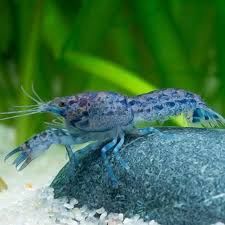
Blue Mexican Dwarf Crayfish 'Cambarellus texanus'
Share
R90.00
Pre-order
Buy and save
Buy and earn R0.18 Loyalty for your next purchase
Loyalty is a discount program that lets you buy products and earn points to redeem on your next purchase. Your Loyalty balance is updated when you pay online or in-store. The Loyalty amount shown on this page can be recalculated at the checkout.
Out of stock, available for pre-order
Blue Mexican Dwarf Crayfish 'Cambarellus texanus'
Share
Product details
⚫ Blue Mexican Dwarf Crayfish (Cambarellus texanus) Care Guide
Also known as the Blue Dwarf Crayfish or Blue CPO-type Crayfish
The Blue Mexican Dwarf Crayfish is a small, colorful freshwater invertebrate prized for its vivid blue coloration and compact size. Peaceful compared to larger crayfish species, it is well suited to planted aquariums and nano setups when given adequate cover and space.
Tank Requirements
Minimum Tank Size: 30 litres
Temperature: 20–26°C
pH: 6.8–8.0
GH: 6–15
KH: 3–10
TDS: 150–300 ppm
They prefer stable water conditions with good filtration and plenty of oxygen. Sudden parameter swings should be avoided, especially during molting periods.
Habitat Setup
Create a secure, natural environment with:
-
Sand or fine gravel substrate
-
Plenty of hiding places (rocks, caves, driftwood)
-
Live plants (especially mosses and hardy species)
-
Gentle water flow
Leaf litter and botanicals can be added to encourage grazing and provide additional shelter.
️ Feeding
Blue Mexican Dwarf Crayfish are omnivorous scavengers:
-
Sinking crustacean pellets or wafers
-
Blanched vegetables (zucchini, spinach, peas)
-
Frozen foods (bloodworms, brine shrimp)
-
Occasional calcium-rich foods for shell health
Feed small amounts once daily, removing uneaten food to maintain water quality.
Tank Mates
Generally peaceful, but territorial toward their own kind if space is limited.
Suitable tank mates:
-
Small, fast-moving fish
-
Peaceful nano fish
-
Snails and shrimp (may be opportunistically hunted)
Avoid:
-
Large or aggressive fish
-
Other crayfish species
-
Slow, long-finned fish
⚠️ Behavioral Note: Newly molted individuals are vulnerable. Ensure plenty of hiding places to prevent stress or cannibalism.
Breeding
Breeding is possible in aquariums.
-
Females carry eggs under their tail
-
Eggs hatch in 3–4 weeks
-
Juveniles are miniature versions of adults and require fine foods and dense cover
Separate adults if survival rates are low.
Sexing / Identification
Males:
-
Longer claws
-
Gonopods visible on the underside
Females:
-
Slightly larger body
-
Wider abdomen for carrying eggs
Interesting Fact
Dwarf crayfish such as Cambarellus texanus are far less destructive than larger crayfish species and can often coexist with plants — making them a rare crayfish suitable for aquascaped tanks.
Reference: Bubbly Fish – Creating underwater wonders
Display prices in:ZAR