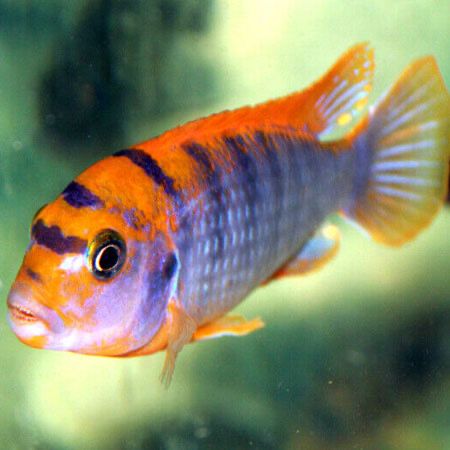
Labidochromis sp. "Hongi"
Share
R160.00
Buy and save
Buy and earn R0.32 Loyalty for your next purchase
Loyalty is a discount program that lets you buy products and earn points to redeem on your next purchase. Your Loyalty balance is updated when you pay online or in-store. The Loyalty amount shown on this page can be recalculated at the checkout.
In stock
Labidochromis sp. "Hongi"
Share
Product details
🔥 Labidochromis sp. “Hongi”
Hongi Cichlid | Lake Malawi Mbuna
“Electric blue meets fiery orange. A Malawi showpiece with unmistakable attitude.”
💎 Product Overview
Labidochromis sp. “Hongi” is a spectacular rock-dwelling Mbuna from Lake Malawi, prized for the dramatic coloration displayed by mature dominant males.
At their best, males develop an intense electric to steel-blue body, contrasted by dark vertical barring and a striking yellow to orange-red dorsal area. The result is a beautifully bold fish that immediately commands attention in a dedicated African cichlid aquarium.
Females and subordinate males are generally more understated, making the transformation of a dominant male even more impressive.
For aquarists looking for a Malawi cichlid that combines premium colour, personality and fascinating social behaviour, the Hongi is an exceptional choice.
✨ Why We Love Them
- Spectacular blue male coloration
- Contrasting yellow to orange-red dorsal fin
- Bold dark vertical barring
- Authentic Lake Malawi Mbuna
- Active and full of personality
- Beautiful territorial display behaviour
- Excellent for dedicated rocky African cichlid aquariums
- Fascinating maternal mouthbrooding behaviour
🌿 Care Requirements
- Scientific Name: Labidochromis sp. “Hongi”
- Common Name: Hongi Cichlid / Red Top Hongi
- Origin: Lake Malawi, Africa
- Adult Size: Approximately 10–13 cm
- Care Level: Intermediate
- Temperature: Approximately 23–28°C
- pH: Approximately 7.5–8.5
- Water: Alkaline and mineral-rich
- Temperament: Semi-aggressive / territorial
- Diet: Omnivorous with a strong plant and algae-based component
- Aquarium Style: Rocky Lake Malawi setup
Stable water conditions, excellent filtration and strong oxygenation are particularly important when maintaining a thriving Mbuna display.
🪨 The Perfect Malawi Rockscape
Hongi Cichlids are at their best amongst dramatic stonework.
Create an aquarium featuring:
- Large rock formations
- Caves and narrow crevices
- Multiple hiding areas
- Broken lines of sight
- Open swimming areas
- Fine sand substrate
Well-designed rockwork does more than create an authentic Lake Malawi aesthetic. It provides individual territories and retreat areas that can help manage natural Mbuna aggression.
🐠 Temperament & Tank Mates
Like other Mbuna, Labidochromis sp. “Hongi” can be territorial and assertive, particularly mature males.
They are best suited to a carefully planned African cichlid aquarium with appropriately selected species capable of living under similar hard, alkaline water conditions.
Avoid delicate community fish and species requiring soft or acidic water.
🍽️ Feeding
The Hongi naturally grazes on food associated with rocky surfaces and should receive a balanced diet with plenty of quality plant-based ingredients.
Suitable foods include:
- Premium Mbuna pellets
- Spirulina-based flakes
- Vegetable-rich cichlid foods
- Quality algae-based foods
- Appropriate supplementary foods in moderation
Avoid excessive amounts of rich, protein-heavy food.
❤️ Breeding Behaviour
Labidochromis sp. “Hongi” is a maternal mouthbrooder.
During breeding, males display intensely and establish territories to attract females. After spawning, the female carries the fertilised eggs and developing fry inside her mouth until they are ready for release.
It is one of the behaviours that makes a carefully maintained Malawi aquarium so fascinating to observe.
🎨 Colour & Individual Variation
Colour intensity can vary considerably between individuals.
Dominant mature males typically show the most spectacular blue body and orange-yellow dorsal coloration, while females, juveniles and subordinate males may remain considerably more subdued.
Age, genetics, dominance, breeding condition, diet and environment can all influence the appearance of an individual fish.
💎 The Bubbly Fish Selection
Labidochromis sp. “Hongi” is a Mbuna for aquarists who want their African cichlid display to make a statement.
The combination of electric blue, fiery dorsal colour and bold Malawi personality creates a fish that becomes increasingly impressive as it matures.
“Malawi colour at its finest. Bold, electric and impossible to overlook.”
Display prices in:ZAR